
CERES aspires to revolutionize the treatment paradigm for neurological diseases characterized by bioenergetic deficiencies
INTEGRATIVE TECHNOLOGY TO PROVIDE
BRAIN CELLS WITH CREATINE
Ceres relies on its distinctive and innovative Creatine-to-Neurons™ approach to supply brain cells with creatine. This approach consists of creatine prodrugs, a highly innovative and adaptable formulation ensuring the stability and sprayability of the prodrugs, and intra-nasal delivery to target the Nose-to-Brain pathway and finally the brain, particularly neurons.
As of today, Ceres Brain Therapeutics stands as the sole entity capable of delivering creatine to cerebral neurons. This groundbreaking method opens the door to a myriad of clinical applications, including rare genetic diseases characterized by a primary lack of cerebral creatine, conditions related to mitochondrial deficiencies, epigenetic diseases, and broader societal health issues
Creatine
Creatine is a naturally occurring compound within cells, playing a crucial role in cellular energy production. It is synthesized in the body from the amino acids arginine, glycine, and methionine, primarily in the kidneys and liver.
Additionally, creatine is also present in certain animal-derived foods such as meat and fish. On a cellular scale, creatine is converted into creatine phosphate, a molecule that rapidly stores and releases energy, facilitating the regeneration of ATP, the primary cellular energy source.
Creatine has garnered increasing interest in the field of neurological diseases due to its potential neuroprotective properties. Studies show that creatine exert beneficial effects on cellular health by reducing oxidative stress and modulating various cellular signaling pathways.
Furthermore, it appears to possess neuroprotective properties, holding potential in the treatment of certain neurologic diseases such as degenerative diseases, traumatic brain injuries, stroke, age-related loss of cognitive function and more generaly cognitive impairments.
Creatine, although naturally occurring in the body, may face challenges in crossing blood-brain barrier due to the creatine transporter that can be saturated, impaired or lacking. Dopaminergic neurons, which produce the neurotransmitter dopamine, are particularly sensitive to this access restriction.
Platform
« Nose-to-Neurons » Ceres Brain’s platform
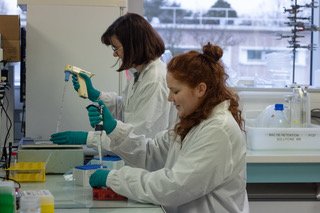
The Ceres Brain's 'Nose-to-Neurons' platform allows for the transition from a hit compound to a drug candidate that has demonstrated its ability to reach the brain, particularly the neurons, in preclinical models.
This is made possible through:
Possible chemical optimization of the hit to make it more suitable for nasal administration, ensuring its stability and its capability to cross biological membranes,
the use of a unique formulation adaptable to a wide variety of drugs,
the application of protocols in rodents and non-rodents to demonstrate the Nose-to-Brain passage to the brain, particularly to the neurons, and to study its pharmacological effects,
measurement of concentrations at the site of action (the brain and possibly the neurons).

Harnessing AI to Refine CBT101 Clinical Development
At Ceres Brain Therapeutics, we use artificial intelligence and algorithmic modeling as translational decision-support tools to optimize CBT101 clinical development. Our approach integrates preclinical data, CBT101’s mechanism of action, scientific literature on ALS, CTD and creatine biology, and available ALS and CTD patient datasets to support more informed clinical trial design.
Addressing patient heterogeneity
ALS and CTD are highly heterogeneous diseases, with substantial variability in clinical presentation, biological drivers and, in ALS, disease progression rate. This heterogeneity can make it difficult to identify treatment effects, particularly in early-stage clinical studies.
For CBT101, whose rationale is grounded in neuronal energy metabolism and mitochondrial dysfunction, patient stratification is a critical component of clinical development, particularly in ALS. AI-supported modeling helps us identify patient profiles with the strongest mechanistic and clinical rationale for treatment response.
AI as a translational decision-support tool
Our AI-supported approach is built around three complementary objectives:
-
1. Refining patient selection
By combining preclinical findings, CBT101’s biological rationale, ALS disease-progression data, CTD clinical characteristics, and published evidence on creatine biology, we aim to define inclusion criteria that are clinically meaningful and mechanistically justified.
-
2. Supporting Phase 2 trial design
Algorithmic modeling has helped Ceres establish a rational inclusion range for the planned Phase 2a study in ALS and the future clinical development of CBT101 in CTD. The objective is to enrich clinical studies for patients with a higher mechanistic likelihood of response, while maintaining clinical relevance and feasibility.
-
3. Developing virtual patient models
Ceres is also exploring AI-supported virtual patient modeling to contextualize placebo responses and generate external standard-of-care comparators. These models are intended to complement, not replace, conventional clinical trial methodology, and to improve the interpretability of future clinical data.
Transforming clinical development with AI
-
For patients
AI-supported stratification may help design more targeted clinical studies, with better alignment between patient profiles and CBT101’s mechanism of action.
-
For clinicians
More refined patient stratification and improved contextualization of disease progression may support more robust assessment of treatment effects.
-
For investors and partners
A more focused clinical development strategy can help reduce execution risk, improve trial efficiency, and increase the likelihood of detecting a meaningful clinical signal.
-
For science
Integrating AI with translational biology may generate new insights into ALS and CTD heterogeneity, neuronal energy failure, and the patient subgroups most likely to benefit from CBT101.
By combining neuroscience, pharmacology, clinical expertise, and AI-supported modeling, Ceres aims to make CBT101 clinical development more precise, more robust, and more informative.
Publications
Henri Benech, Victoria Flament, Clara Lhotellier, Camille Roucairol,Thomas Joudinaud.
Pharmaceutics. 2026 Jan 7;18(1):80. doi: 10.3390/pharmaceutics18010080.
Disdier C, Lhotellier C, Wagner S, Andriambeloson E, Théodoro F, Pruvost A, Joudinaud T, Bénech H, Mabondzo A.
Front Aging Neurosci, 2025 Jul 11; 17:1597263. doi: 10.3389/fnagi.2025.1597263. eCollection 2025. PMID: 40717895.
Léa Kengne Kamkui, Clémence Disdier, Amaury Herbet, Narciso Costa, Anne-Cécile Guyot, Didier Boquet & Aloise Mabondzo.
Pharmaceutics 2025, 17(6), 681
Disdier C, Lhotellier C, Guyot AC, Costa N, Théoodoro F, Pruvost A, Skelton MR, Joudinaud T, Mabondzo A, Bénech H.
European Journal of Medicinal Chemistry 284 (2025) 117195. Epub 2024 Dec 20.
Disdier C, Soyer A, Broca-Brisson L, Goutal S, Guyot AC, Ziani N, Breuil L, Winkeler A, Hugon G, Joudinaud T, Bénech H, Armengaud J, Skelton MR, Harati R, Hamoudi RA, Tournier N, Mabondzo A.
Neurobiol Dis. 2024 Nov;202:106720. doi: 10.1016/j.nbd.2024.106720. Epub 2024 Oct 26.
Dodecyl creatine ester therapy: from promise to reality.
Aloïse Mabondzo, Jiddeke van de Kamp, Saadet Mercimek‑Andrews.
Cellular and Molecular Life Sciences (2024) 81:186. Epub 2024 Apr 17.
Broca-Brisson L, Harati R, Disdier C, Mozner O, Gaston-Breton R, Maïza A, Costa N, Guyot AC, Sarkadi B, Apati A, Skelton MR, Madrange L, Yates F, Armengaud J, Hamoudi R, Mabondzo A.
Elife. 2023 Oct 13;12:RP88459. doi: 10.7554/eLife.88459.
Mabondzo A, Harati R, Broca-Brisson L, Guyot AC, Costa N, Cacciante F, Putignano E, Baroncelli L, Skelton MR, Saab C, Martini E, Benech H, Joudinaud T, Gaillard JC, Armengaud J, Hamoudi R.
Front Mol Neurosci. 2023 Mar 24;16:1118707. doi: 10.3389/fnmol.2023.1118707
Ullio-Gamboa G, Udobi KC, Dezard S, Perna MK, Miles KN, Costa N, Taran F, Pruvost A, Benoit JP, Skelton MR, Lonlay P, Mabondzo A.
Nanomedicine (Lond). 2019 Jun;14(12):1579-1593. doi: 10.2217/nnm-2019-0059. Epub 2019 Apr 30.
Udobi KC, Kokenge AN, Hautman ER, Ullio G, Coene J, Williams MT, Vorhees CV, Mabondzo A, Skelton MR.
Genes Brain Behav. 2018 Jul;17(6):e12461. doi: 10.1111/gbb.12461. Epub 2018 Feb 20.
Trotier-Faurion A, Passirani C, Béjaud J, Dézard S, Valayannopoulos V, Taran F, de Lonlay P, Benoit JP, Mabondzo A.
Nanomedicine (Lond). 2015 Jan;10(2):185-91. doi: 10.2217/nnm.13.205. Epub 2014 Feb 21.
Trotier-Faurion A, Dézard S, Taran F, Valayannopoulos V, de Lonlay P, Mabondzo A. J
Med Chem. 2013 Jun 27;56(12):5173-81. doi: 10.1021/jm400545n. Epub 2013 Jun 7.
Communications
T. Joudinaud. CBT101 development: Steeple chase race toward clinical trials. Xtraordinaire Symposium, 2023 Sept 30th 2023, Paris, France
T. Joudinaud. Advancements towards clinical trial of CBT101. ACD virtual conference 2023, August 25-26, 2023
A. Mabondzo. Development of cerebral brain organoids from CTD patients. ACD virtual conference 2023, August 25-26, 2023
Disdier C, Benech H, Callebert J, Joudinaud T , Mabondzo A. CBT101, a creatine ester prodrug, secures energy supply and boosts mitochondrial dynamics in the 6OHDA rat model. 14th congress targeting mitochondria. October 2023 Berlin, Germany.
Kengne Kamkui L, Herbet A, Disdier C , Hautiere M , Costa N , Joudinaud T , Benech H , Mabondzo A , Boquet D. Nose-to-brain delivery of biotherapeutics. An approach to treat brain metastases. 14th conference of Cerebrovascular Biology June 2023 Uppsala, Sweden.
Soyer A. et al Evaluation of brain F-18-FDG-PET imaging as a translational biomarker for therapeutic monitoring in creatine transporter deficiency. the 35th Annual Congress of the European Association of Nuclear Medicine October 2022, Barcelona Spain.
Bénech H. et al CBT101, a creatine ester prodrug, shows promising results in mitochondrial diseases preclinical models. Mitonice September 2022, Nice France.